

LEVEL 2 · LESSON 02 Reading time · 5 min
Soft Baits
Understanding Ajing & LRF Soft Baits
What Is a Soft Bait?
A soft bait is a flexible artificial lure made from a soft material and designed to imitate the shape, movement or presence of natural prey.
In Ajing and Light Rock Fishing, soft baits are often extremely small. Their flexibility allows them to move with very little force, making them useful when fishing light jigheads and subtle presentations.
Unlike a hard lure, a soft bait can bend, compress and change shape as it moves through the water or when a fish inhales it.
This gives the angler control over both the visual presentation and the way the lure behaves during a bite.
Soft baits are one of the most important types of Ajing lures, especially when fishing with lightweight jigheads.
.jpeg)
How I Choose Size
I normally start with a 2-inch soft bait. If I get touches but fail to hook fish, I often reduce to 1.6 inches, sometimes 1.2 inches.
Sometimes I shorten the bait myself with my teeth, creating a smaller profile similar to a shortened Bait Breath Fish Tail.
Why Softness Matters
Softness is one of the defining characteristics of a good finesse soft bait. Aji often feed by suction, pulling small prey into the mouth rather than attacking it with a strong bite.
A soft lure can collapse more easily as it is inhaled, helping the presentation feel less rigid. Material softness also changes the action of the lure. A very soft bait may react to the smallest current or line movement, while a firmer bait may hold its shape and create a more pronounced profile. There is no single ideal level of softness.
The right material depends on the presentation, durability, buoyancy and behaviour you want.
Soft Bait Profiles
Soft baits come in many different profiles. The shape of the body and tail changes how water moves around the lure and how much action is created.
Pin Tail
A slim body with a small or minimal tail. Pin-tail profiles are common in Ajing because they can produce subtle movement with very little resistance.
Minnow / Baitfish Profile
A more recognisable baitfish shape that can provide a slightly larger visual profile while remaining suitable for light-game presentations.
Curly Tail / Grub
The curved tail creates movement when water passes over it. These profiles can add vibration and water displacement without requiring an aggressive retrieve.
Shad / Ribbed Profiles
Wider bodies, ribs or segmented profiles can increase water resistance and create extra vibration or a different fall compared with very slim worms.
In practice, profile matters because it changes how the same jighead behaves. This is why soft baits and jigheads should always be considered as one system.
A slim lure can fall differently from a wider lure even when the jighead weight is identical
Soft Bait Size
Size changes the lure's profile, fall and visibility.
Smaller baits can be useful when the fish are cautious or feeding on very small prey, while larger baits can give you more presence in disturbed water or when larger fish are active.
There is no universal best size.
In Ajing, a compact soft bait around the 2-inch range is a common starting point, but the correct size depends on the fish, conditions and presentation.
Think of size as a way to change the profile and amount of water the lure moves, not simply as a measurement.

Buoyancy: Sinking, Floating and Neutral
Soft bait buoyancy can change the way a jighead behaves after the cast.
A sinking soft bait adds to the downward movement created by the jighead. A more buoyant or floating material can slow the descent and may help the lure hold higher in the water column.
A nearly neutral lure can be useful when you want a slow, controlled presentation with less tendency to rise or fall quickly.
This is especially noticeable with very light jigheads, where small differences in buoyancy can have a large effect on the overall fall.
A practical way to learn a lure is to observe how it behaves in salt water without the jighead. Then you can understand what the jighead is adding to the presentation
Colour
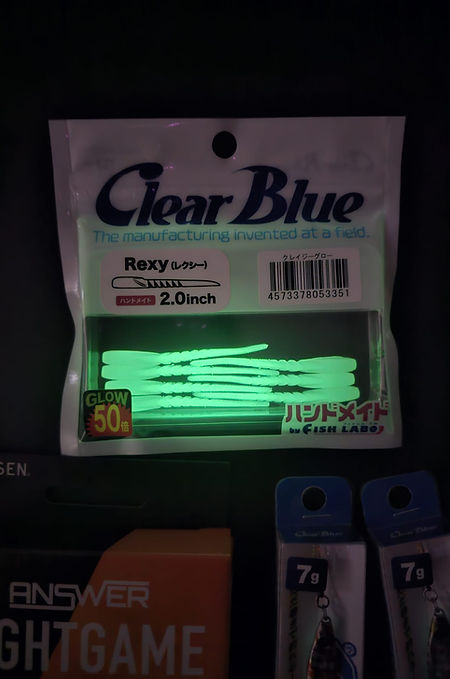
Colour is another variable that can be changed without changing the overall lure profile. Natural, translucent and glitter patterns can provide a subtle presentation, while Glow, UV-reactive and stronger colours can become useful when visibility changes or when you need a more obvious target.
Colour should be treated as one part of the presentation rather than a guarantee of success. For a deeper look at colour selection and the patterns we use most often for Ajing and LRF, see our dedicated article on Best Soft Bait Colours for Ajing & LRF.
Around artificial lights, I particularly like glitter colours. With little or no artificial light, I tend to move
towards glow options.
Matching Soft Baits to Conditions
Instead of asking which soft bait is the best, ask what you need the lure to do.
-
Need a subtle presentation? A slim, soft profile may be a good starting point.
-
Need more movement? A ribbed or curly-tail design can create more water displacement.
-
Need to stay higher? A more buoyant material can slow the fall.
-
Need more profile? Increase size or choose a wider body.
-
Need a different visual signal? Change colour without changing the profile.
This way of thinking makes lure selection more systematic and helps you understand why a change worked.
Common Mistakes
There is no single perfect combination.
A small soft bait is usually better suited to a compact hook and proportionally sized head.
A larger soft bait may require a longer hook or a different head design to maintain the correct position and action.
The soft bait should sit naturally on the hook without being stretched, compressed or distorted.
This is particularly important with very soft Ajing plastics.
When the lure is rigged incorrectly, even a high-quality soft bait can lose its intended action.
Personal Field Rule
If I am getting touches but not hooking fish, I first question size and presentation before assuming I need a completely different lure.
✓ LESSON COMPLETE
You now understand how soft baits can change your presentation, from size and softness to buoyancy, colour and action. You’ve learned why small details matter in Ajing, especially when fish are feeding carefully or targeting small prey.
Next lesson: Finding the Right Depth
Learn how to find where the fish are holding and how to keep your lure in the strike zone.