
Best Soft Bait Colors for Ajing & LRF

Updated: Aug 5
Walk into any tackle shop or scroll through an online store, and you're hit with a wall of soft plastics in every color imaginable.
Neon pinks, transparent greens, solid blacks, glitter-filled silvers.
It's overwhelming, especially if you're new to Light Rock Fishing (LRF) or Ajing.
So the obvious question is: do fish actually care about these subtle shade differences?

Short answer: yes, but not for the reason you'd think.
In finesse saltwater fishing, color choice isn't about picking your favorite shade off the shelf. It's about light penetration, water clarity, and silhouette.
Every major JDM brand ClearBlue, TICT, Arukazik, Bait Breath, engineers its colors around this same logic, even if each one has its own naming system and its own take on the technology. Once you understand the underlying principles, picking the right bait from any of these brands stops being guesswork.
Here's the breakdown, and exactly what to tie on your jighead for each situation.
How Fish Actually See Your Lure
Most marine predators have two types of light receptors: rod cells, which give them strong sensitivity in low light but almost no color detail, and cone cells, which handle color during the day.
Species like Horse Mackerel (Aji) also have UV-sensitive receptors, letting them pick up ultraviolet light that's completely invisible to us.

This is the biological advantage that Keimura (UV-reactive) baits are built to exploit. Colors like "Ami Spark" or "Rg Blue Holo" in the ClearBlue line absorb ambient UV and re-emit it as a subtle glow the fish can see, even when we can't.
What Is Keimura Light?
Keimura is a Japanese term that roughly translates to "bright light" or "glitter light," and it refers to a coating or additive built into the soft plastic itself, not a paint job on the surface.
It contains pigments that absorb ultraviolet (UV) light (the part of the spectrum invisible to us) and instantly re-emit it as visible light with a soft, natural blue-white glow.
Unlike a glow-in-the-dark bait, Keimura doesn't need to be "charged" with a flashlight and it doesn't fade over a few minutes. It reacts continuously, in real time, as long as there's UV light available in the water.
That UV can come from the sun, from moonlight, or even from ambient skylight on an overcast day, which is exactly why Keimura works even when conditions look too dark or too dull for a normal lure to stand out.
Keimura vs. Glow: What's the Difference?
These two get mixed up constantly, but they work on completely different principles:
Keimura reacts to UV light in real time. No charging needed. It's active any time UV is present, including underwater and on cloudy days. The effect is subtle: a soft shimmer rather than a bright glow.
Glow stores light energy after exposure to a bright source (sunlight, flashlight, UV torch) and slowly releases it as visible light in the dark. It fades over several minutes and needs recharging.
In practice, this makes them suited to different jobs. Keimura shines during the day and at dusk, in clear or slightly stained water, where UV is present but visible light is limited.
Glow takes over once it's fully dark and there's no meaningful UV left to trigger a Keimura reaction, which is why the two are rarely interchangeable, and why serious Ajing anglers carry both.

Why Aji and Seabass Respond So Strongly to It
Species like Horse Mackerel (Aji) and Seabass have UV-sensitive cells in their eyes that most freshwater species and humans simply don't have. To them, a Keimura bait doesn't just look "brighter", it produces a visual signature that closely resembles the natural UV reflectance of small baitfish, shrimp, and plankton.
That's the real advantage: it's not a gimmick color, it's mimicking something the fish's biology is already tuned to notice.
Why Silhouette Beats Color in Low Light
In very low light, night sessions or deep water, a fish's vision shifts away from color and toward contrast. Seen from below, against the slightly lighter surface of the water (even at night), a solid-colored lure throws a clean, sharp outline.
That's why dark colors like black, deep purple, or "Spark Blue Core" often outfish bright colors after dark: they give the fish one clear, unambiguous target to lock onto.
Brand by Brand: How Each One Approaches Color
The physics above is universal, but each brand has built its own vocabulary and its own signature technology around it. Here's how to read the color names you'll actually see on the shelf.
Clear Blue: Core Technology and Translucent Realism

ClearBlue built its reputation on translucent, "ghost-like" bodies.
Colors like Ami Spark and Rg Blue Holo pair Keimura pigment with a mostly clear body, while the ClearBlue Sexy-B uses "Core" technology — pigment concentrated in the center of the bait, wrapped in translucent silicone — to mimic the internal structure of larval fish and crustaceans.
For dark conditions, Spark Blue Core trades translucency for a defined silhouette. ClearBlue is generally your go-to when you want a natural, high-clarity presentation with UV built in.
TICT: Precision Color Coding for Every Condition
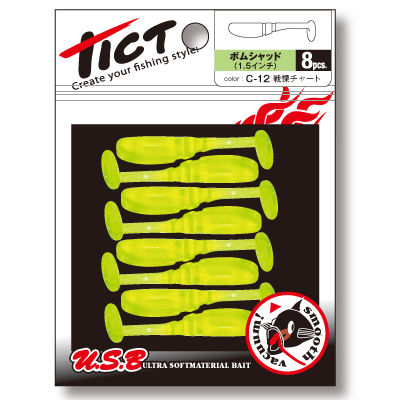
TICT takes a more systematic approach, numbering its colorways (C-2, C-3, C-12, C-19, C-20...) and tagging each with the technology it uses Glow, Keimura, or Ebi (shrimp-scented).
On lures like the TICT Fisit Nude, you'll typically find a spread that covers all three categories in one lineup: a couple of Keimura patterns for daylight and dusk, a couple of Glow patterns for full dark, and natural or Ebi-scented options for finicky, pressured fish.
If you want a single brand that lets you build the "3-color starter pack" (below) from one product line, TICT is one of the easiest to shop.
Arukazik Japan: Scent-First, With Color as the Second Layer
Arukazik Japan leans heavily on scent and an ultra-soft body.

Lures like the Namajako and Sankaku are built first to trigger a bite through vibration and flavor — but color still follows the same rules as everywhere else. Their range typically includes Keimura Blue and Keimura Pink for UV reactivity, White Glow for full-dark conditions (genuinely an all-rounder - effective in both clear and murky water, day and night), plus natural plankton-mimicking patterns like Ami Flakes and Amidou.
If your fish are following your lure but not committing, an Arukazik pattern with strong scent and a simple, natural color is often the fix.
Bait Breath: Keimelight and Realistic Baitfish Patterns

Bait Breath brings its own UV branding, Keimelight, used across baitfish-imitation lures like the Fish Tail Ringer.
Typical colorways include Glow Okiami (glow shrimp) for night sessions, Real Shrimp UV and Grow Flake Clear for high-clarity daytime work, and Champagne Gold as a natural, flash-heavy option for sunny conditions.
Bait Breath pairs its color technology with the brand's signature B.Y.S. scent formula, which is worth knowing if you're fishing heavily pressured harbors where fish get a long, close look at the bait before committing.
Strategy for Clear Water
In clear water, fish get a good, long look at your lure. This is where "natural" and "translucent" win.
Primary choice: Ami, Shirasu, or Peach Red Core
Bright sun: go with silver or holographic glitter — it throws a realistic flash that mimics baitfish scales
Calm water, spooky fish: strip it back to a clear pattern with zero glitter; sometimes flash is the thing scaring them off
Keimura in clear water: most JDM clear plastics carry Keimura particles. Even on overcast days, or once you're deep enough that visible light starts to fade, UV rays still penetrate the water column. Keimura baits absorb that UV and emit a soft, natural glow, something Aji and Seabass consistently key in on.
Strategy for Stained or Turbid Water
When algae or particulate matter cut visibility, the job of the lure changes: it's no longer about mimicry, it's about being found. The bait needs to cut through the haze.
Primary choice: Chart Head, Pink Head, or Chart Glow Holo
Greenish water: chartreuse is usually your most visible option, since it aligns with the wavelength that actually travels furthest through that water
Muddy water: dark colors, black, deep purple, give the sharpest contrast and the clearest silhouette
Fish rely on their lateral line to feel a lure's vibration in low visibility, but they still need to see it to commit to a strike. A solid, dark bait creates a defined silhouette against the lighter muddy water or night sky above. A transparent lure, on the other hand, effectively disappears.
Strategy for Low-Light and Night Fishing
Ajing is, at its core, a night game, which is exactly why "Glow" colors live permanently in every Japanese angler's box. As light fades through dusk into full dark, the right color evolves with it:
Time of day | Recommended pattern type | Example colors |
Dawn/Dusk (Mazume) | Keimura / UV-reactive | ClearBlue Ami Spark, Arukazik Keimura Blue/Pink |
Night, under harbor lights | Keimura + ambient light | ClearBlue Lemon Water, TICT Keimura colorways |
Night, pitch black / deep water | Glow or solid dark | TICT Glow colorways, Bait Breath Glow Okiami, Arukazik White Glow, solid Black |
One tip worth remembering: don't overdo the glow. A fully-loaded glowing bait can be too aggressive and spook wary fish. Look for "dot glow" or "crushed glow" patterns — tiny glowing flecks instead of a solid glowing body — for a more natural presentation.
Quick-Pick Color Chart
If you want the whole guide in one glance, here's the condensed version:
Water condition | Go-to color |
Clear water, sunny | Silver/holo glitter or Ami |
Clear water, calm/shy fish | Clear, no glitter |
Cloudy/deep water | Keimura (UV) patterns |
Green/stained water | Chartreuse |
Muddy water | Black or deep purple |
Dawn/dusk | Mazume Orange Core, Ami Spark |
Night under lights | Lemon Water, Spark Blue Core |
Night, pitch black | Crazy Glow or solid Black |
The 3-Color Starter Pack Strategy
If you're building a minimalist, highly effective LRF box, you don't need 20 colors across four brands — you need to cover the three light conditions that matter most:
A UV/Keimura pattern — for clear water and daytime (any brand's Keimura line)
A Solid Pink, White, or Black — for murky water and strong silhouettes
A Glow pattern — for night fishing and deep water
Mix and match across ClearBlue, TICT, Arukazik, and Bait Breath freely — the technology behind each category is functionally the same, so the "right" brand for you often comes down to body shape, scent, and action rather than color alone.
FAQ
What color soft bait works best for Aji at night?
Under harbor or dock lights, Lemon Water, Ami Spark, and Spark Blue Core are the most consistent producers, since they combine artificial light with UV reactivity. In pitch-black conditions away from any light source, switch to Crazy Glow or solid black for a stronger silhouette.
Does Keimura (UV) actually make a difference?
Yes. Aji and many other light-tackle predators have UV-sensitive vision, so Keimura pigments — which absorb ambient UV and re-emit it as a soft glow — stay visible even in murky or deep water where visible light has already faded.
What's the single best all-round color if I can only buy one?
A UV Clear/Translucent pattern is the most versatile starting point — it performs in clear water during the day and still benefits from Keimura reactivity as light drops.
Do glow baits need to be "charged" before fishing?
Yes — expose them to a bright light (phone flashlight, headlamp, or a dedicated UV charger) for 10-20 seconds before casting. The glow fades over several minutes, so recharge periodically through a night session.
At Ajing Store, we carry the exact JDM soft bait profiles and colors the pros use in Japan. From Keimura and Glow patterns to the full ClearBlue, Bait Breath, TICT, Arukazik Japan lineup covered in this guide.
We ship fast, direct from our EU warehouse in Portugal. Zero customs fees, no hidden taxes, and free shipping on qualifying orders.
Tight lines and bright strikes!


Comments